So the Philippines is entering summer season, and a lot of people are planning vacations, beach trips, and quick staycations. This is one of the busiest times for vacation rentals, Airbnb hosts, and anyone with short-term rentals. And let’s be real, scams are everywhere in the Philippines. Banking, businesses, you name it. Even rental hosts aren’t safe from it.

This post is just for awareness for hosts who have an online presence like a website or social media pages. As a web developer who recently launched a site for a local hotel and resort, I wanted to share a few tips on how you can protect your business from scammers.
A Quick Story
The manager of Seascape (a recent web project of mine) called me up and told me about this fake Facebook page they found. Someone had copied their entire page. Every post. Every photo. Everything. A fake page that looked just like the real one.
When she tried booking a room through the fake page, the scammer said the website was under maintenance (even though that day when she called, their website was up and running as I’m always monitoring it). That’s how they do it. They make you think the page is real, then find ways to take your money without ever giving you a room.
This Issue is All Over the News
Here are some reports from GMA News:
This issue was honestly a bit of a wake-up call for me. If it can happen to them, it can happen to any business with an online presence. I’m a web developer and designer, not a cybersecurity expert, so I won’t pretend to know everything about this. But through the projects I’ve worked on, I’ve picked up a few things that seem to make a real difference.
1. Continuous Awareness on Your Page
With this growing scam issue, you need to always stay alert. From time to time, update your users and guests by posting some awareness content on your page.
This is what popular businesses are already doing. Banking companies like GCash, BPI, and other banks send continuous reminders about not sharing OTPs. They invest a huge amount of money into this, but you don’t have to. You can simply post on your social media accounts something like “this is the only official page we have.“
2. Keep Your Eyes Open
This sounds obvious, but I’ve found that most businesses don’t actually do it. You have to keep watching. Scammers can pop up overnight, and the longer a fake page stays up, the more people it can fool.
What works for me is searching for the business name on Facebook and Google every so often just to see what comes up. Tell your team to do the same. Sometimes a customer will message you and say “hey, I saw another page that looks like yours.” That kind of feedback is gold.
Fake pages often have small giveaways. Maybe the profile picture is slightly blurry, or the page was created very recently, or there’s no blue badge. Or they offer huge discounts on their business page. The sooner you spot these signs, the faster you can act on it.
3. Report It Right Away
If you find a fake page, report it. I know it sounds like it won’t do much, but I’ve found that it actually does work, even if it takes some time. Facebook has a reporting option under the three dots on the page where you can flag it as impersonating your business.
Before you report, take screenshots. Save the URL, capture the copied posts, and note the date. If you have the blue badge and they don’t, that makes your case stronger.
One thing I struggled with at first: don’t try to engage with the scammer. Don’t message them or comment on their posts. Just report and move on. Engaging only gives them attention and sometimes tips them off.
Is Getting a Blue Badge from Meta Effective?
I’m not sure if getting verified is really an effective way to protect your page. I was supposed to include this as one of the things you can do to protect your business page. But we recently came across a sponsored post on Facebook that was supposedly from Pearl Farm Beach Resort, one of the popular beach resorts here in the Philippines.
In the conversation, they were offering a huge discount (which was kinda too good to be true, given that this resort is pretty well known).
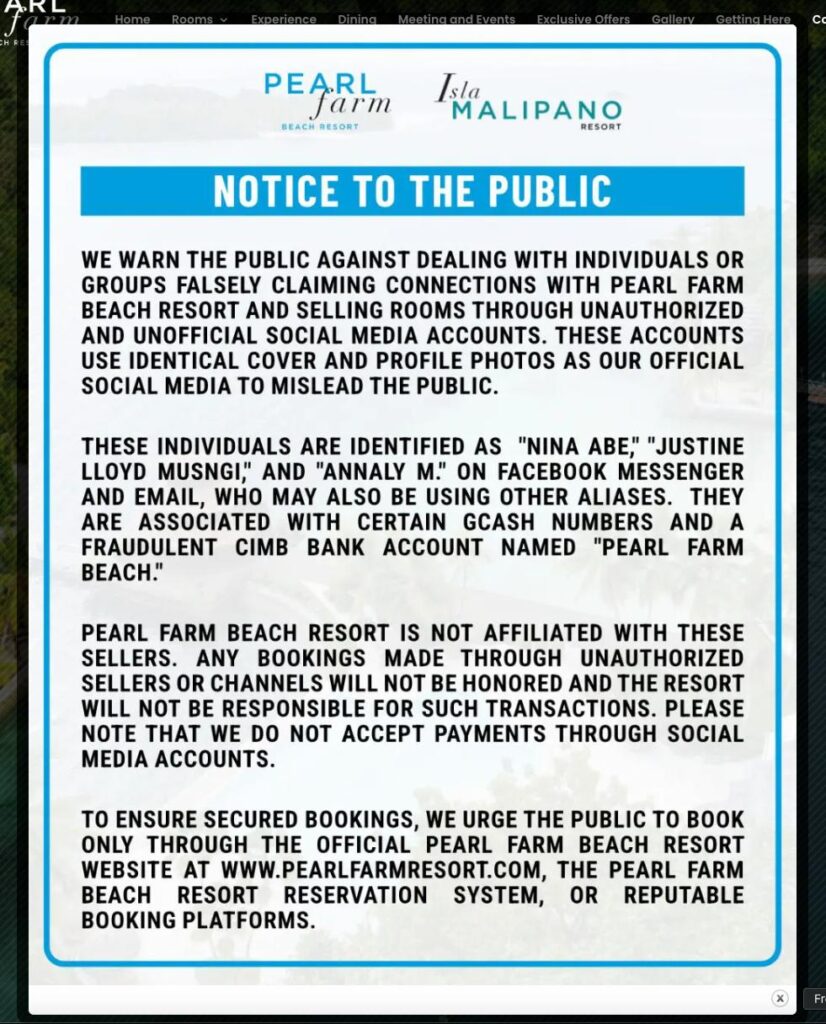
When we checked the fake page, it had a Blue Badge. So this business page was supposed to be legit because of the badge. That’s when I realized this feature might not be as reliable as I thought. The real Facebook page of Pearl Farm even pinned a post warning people about it.
The scammers can actually get their page verified. And keep in mind, that was a sponsored post. Meaning the scammers are actually paying to run ads and boost their fake page. That’s how much effort they’re putting into this, which is pretty insane when you think about it.
I’m not saying don’t get a Blue Badge. But at least be aware that this can happen. And the best thing you can really do for your business is to keep spreading awareness. Just like what Pearl Farm did, they responded quickly by warning their followers.
A Few More Things That Help
Protection isn’t really about one big move. It’s more about a bunch of small habits. Here are a few extras I’ve found useful:
- Link your official website to your Facebook page and vice versa. If someone lands on a fake page but checks your real website, they’ll see the right link there.
- Add a scam warning on your website. Pearl Farm even added a popup on their site warning visitors about fake accounts. If you have a website, a simple notice or popup can remind people to only book through your official channels.
- Turn on two-factor authentication. It won’t stop page cloning, but it stops someone from hacking into your real page and causing even more damage.
- Google your business name every so often. Fake pages and fake websites can show up in search results too, not just on Facebook.
- Encourage reviews and engagement on your real page. A page with hundreds of real reviews and years of activity looks very different from a freshly made fake one.
It’s Not About Being Perfect
I’m not going to say these steps will make you 100% safe. Scammers are always finding new tricks. But in my experience, the businesses that do the basics well are the ones that recover fastest when something happens.
If it can happen to other businesses like Seascape or even Pearl Farm, it can happen to anyone. If you have a website and a social media presence, you’re already a target. That’s not meant to scare you. It’s just the reality of being online today.
So take a few minutes this week. Search for your business name. Check if your page is verified. Talk to your team about what to look for. These small steps can save you and your customers a lot of trouble. Stay safe out there.